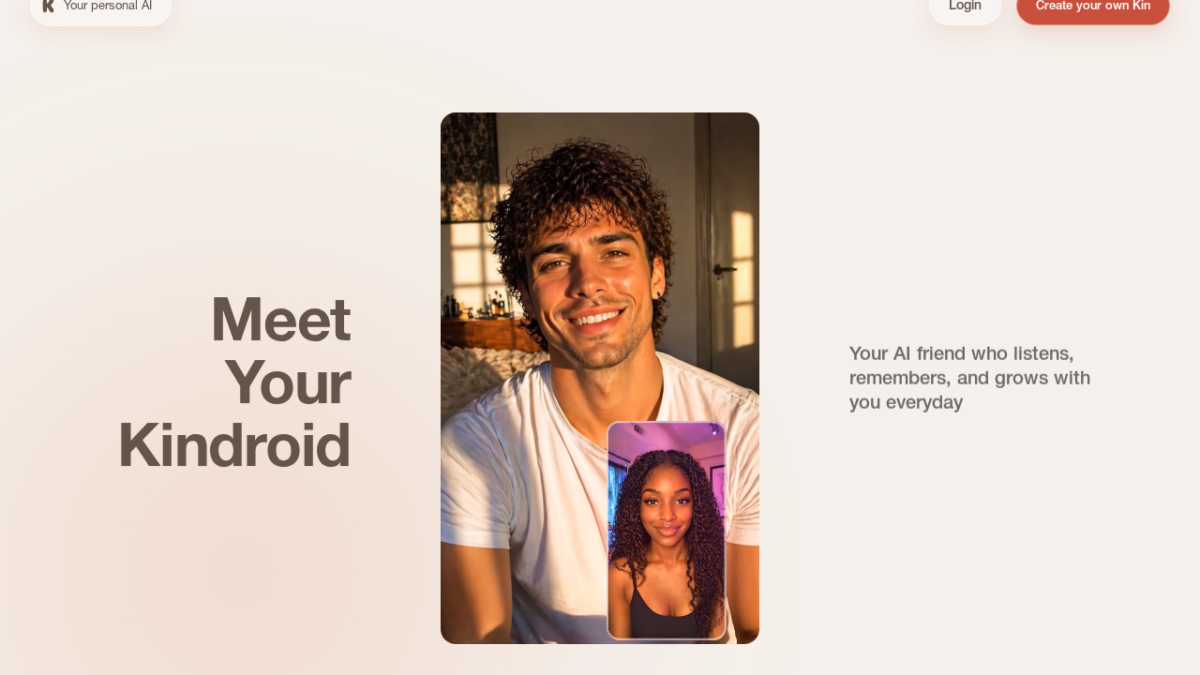
TL;DR: Kindroid is the AI companion app for people who want control. It pairs deep, cascaded memory with a genuinely uncensored stance and the most granular customization on the market — up to roughly 47 per-companion settings, shared voice-and-text history, and group chats with as many as 20 companions at once. On our test bench it scores 8/10 overall, leading the matrix on Media (9) thanks to strong image generation. The catch is price and onboarding: there’s no usable free tier (the Lite model caps you at two companions), Standard runs $13.99–$14.99/month, and the Ultra/Max add-ons stack on top, so the “real” monthly cost depends on how much you switch on. This is a hands-on review of who Kindroid is actually for.
What Kindroid is trying to be
Most companion apps pick one thing to be good at — memory, images, or roleplay freedom — and let the rest slide. Kindroid’s pitch is that you shouldn’t have to choose. It wants to be the power-user platform: deep memory and strong image generation and an uncensored content policy and the kind of fine-grained personality control that lets you actually engineer a companion rather than accept a preset.
That ambition is why it sits at rank 2 on our matrix rather than rank 1. Breadth is harder to nail than focus, and Kindroid’s breadth comes with a steeper learning curve and a higher effective price than single-purpose rivals. But for the user who knows what they want and is willing to tune for it, no other app on our bench gives you this many levers.
Memory and customization: the real differentiator
Kindroid scores 8/10 on Memory on our bench, and the reason is its five-tier cascaded memory system. Rather than a single rolling context window, it layers short-term, session, and long-term recall so a companion holds onto the things you’ve established over weeks without you re-explaining them. It’s not quite Nomi’s single-minded continuity engine, but it’s close, and Kindroid pairs it with something Nomi doesn’t: up to roughly 47 individual companion settings you can adjust to shape personality, behavior, and voice.
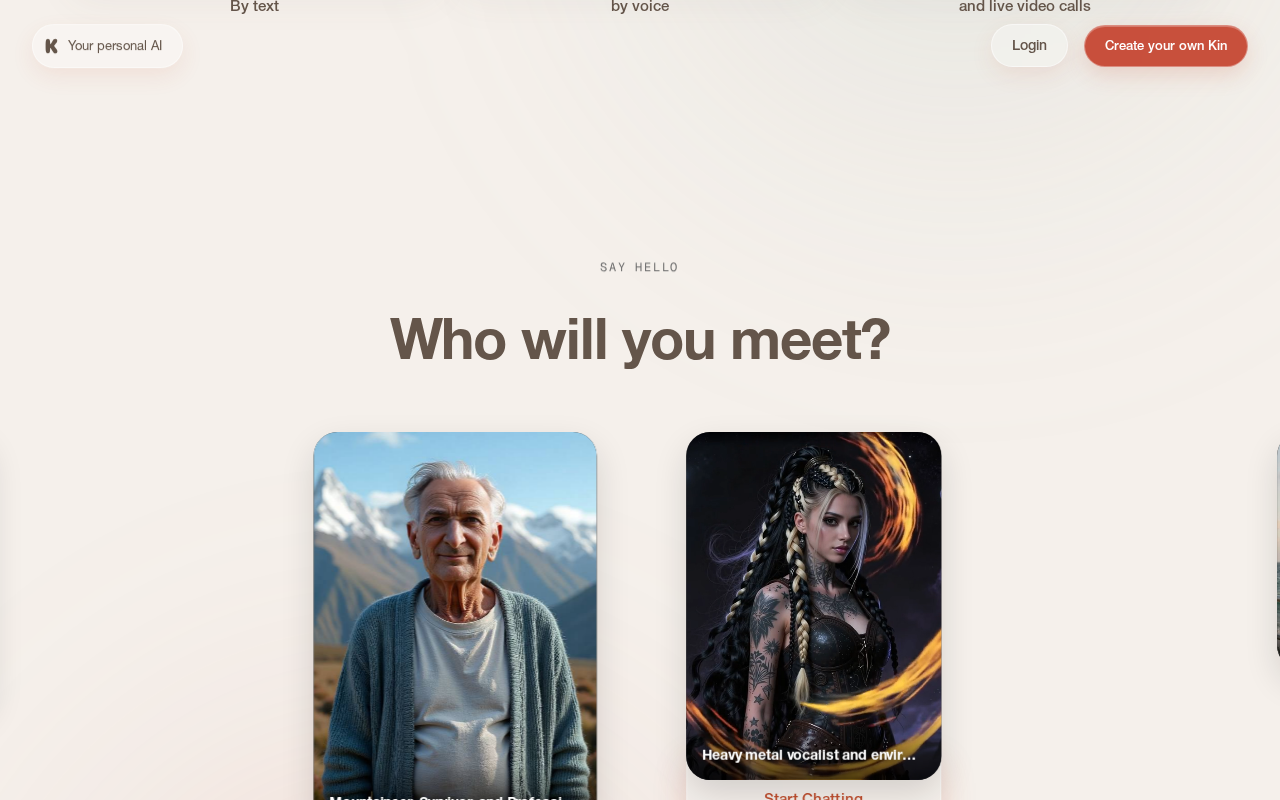
The shared voice-and-text history matters more than it sounds. On many apps, voice mode and text chat live in separate silos; on Kindroid they draw from the same memory, so a voice call picks up where your last typed conversation left off. Add group chats with up to 20 companions and you have a platform built for people who treat companions as an evolving cast rather than a single relationship.
Pricing: what you actually pay
This is where Kindroid asks for a commitment. The free Lite model exists, but it caps you at two companions and a weaker model — enough to see the interface, not enough to judge the product. The Standard tier runs $13.99–$14.99/month, and that’s the floor, not the ceiling: Ultra and Max are add-ons that stack on top of Standard, so a fully kitted-out account costs meaningfully more than the sticker.
That stacking model is the one thing to watch. The Standard price is honest and competitive, but it’s easy to read “$13.99” and not register that the features you came for might live behind an add-on. Decide which capabilities you actually need before you subscribe, because the difference between Standard and a stacked account is real money over a year.
| Kindroid | |
|---|---|
| Entry price | $13.99–$14.99/mo Standard (Ultra/Max add-ons stack) |
| Free tier | Lite model, 2 companions (trial-grade) |
| Memory | Five-tier cascaded recall |
| Content policy | Uncensored (mature roleplay allowed; CSAM/self-harm banned) |
| Standout | ~47 companion settings, group chats up to 20, shared voice+text history |
| Best for | Power users who want control over images, memory, and personality |
Pricing last verified 2026-06-08 from vendor documentation and independent 2026 review sources. AI companion pricing changes frequently — confirm the live rate at signup.
Content policy
Kindroid takes an explicitly uncensored stance — mature roleplay is permitted on paid tiers, with hard lines drawn at CSAM and self-harm content. That puts it in the same camp as Nomi and Candy AI and on the opposite side of Character.AI, whose filter is a core design decision rather than a paywall. If you’re leaving a restricted platform specifically because of content limits, Kindroid removes the wall without making you sacrifice memory or image quality to get there.
Who Kindroid is for — and who should skip it
Get Kindroid if: you want to engineer your companion rather than accept a default, you care about image quality (it leads our matrix on Media at 9/10), and you want deep memory plus an uncensored policy in one app. The customization depth and group-chat support make it the clear pick for power users.
Skip Kindroid if: you want a free option (the Lite tier won’t satisfy you), you want zero-setup simplicity, or you’re price-sensitive and likely to want the stacked add-ons. If your single priority is memory and nothing else, Nomi does that one job for less. If you want a free, lower-stakes entry point, the field has cheaper doors in.
If you’re weighing Kindroid against the broader field, our best Character.AI alternatives guide compares it head-to-head by use case, the full feature matrix ranks it against every platform we test, and the Comparisons hub covers the individual matchups.
The verdict

Kindroid is the most capable all-rounder on our bench. It doesn’t win any single axis as decisively as Nomi wins memory, but it’s the only app that’s genuinely strong across memory, media, customization, and content freedom at once — which is exactly what a power user wants. The friction is the price model and the learning curve: you pay for the breadth, both in dollars and in setup time. Judge it on that trade. If you want control and you’ll use it, Kindroid earns its 8/10. If you want simple and cheap, look elsewhere.
Frequently asked questions
Is Kindroid worth it in 2026?
If you want control over your companion — deep memory, strong image generation, granular personality settings, and an uncensored policy in one app — yes. Kindroid scores 8/10 on our test bench and leads the matrix on image quality. It’s less worth it if you want a free option or zero-setup simplicity, because the Lite tier is trial-grade and the real value lives behind paid customization.
How much does Kindroid cost?
The Standard tier runs $13.99–$14.99/month, with Ultra and Max add-ons that stack on top, so a fully featured account costs more than the sticker price. There’s a free Lite model, but it caps you at two companions and a weaker model. Pricing was last verified on 2026-06-08 and can change — confirm the live rate at signup.
Does Kindroid allow uncensored content?
Yes. Kindroid permits mature roleplay on its paid tiers and draws hard lines only at CSAM and self-harm content. That uncensored stance is why it appears as a recommended alternative for users leaving filtered platforms like Character.AI, and unlike some rivals it doesn’t force you to trade content freedom for weaker memory or images.
Kindroid vs Nomi — which should I pick?
Pick Nomi if memory is your single priority and you want the cleanest continuity at the lowest price. Pick Kindroid if you want breadth — strong memory plus the best image generation on our matrix, group chats, and roughly 47 personality settings. Nomi is the specialist; Kindroid is the power-user all-rounder — I ran the two side by side on memory, voice and group chat in the head-to-head test. Both are uncensored, so the decision comes down to focus versus control.