TL;DR: The monthly price an AI companion app shows you on its pricing page is, for most of the market, the floor — not the bill. We pulled the published prices for 13 AI companion apps from 30+ vendor pages and independent 2026 reviews and lined the advertised “from $X/month” number up against what you actually pay once token systems, promo-then-recurring renewals, weekly billing, and bring-your-own-API-key costs kick in. Five apps advertise a price that roughly matches reality. The other eight use at least one mechanism that pushes real spend above the sticker — in the worst case (Talkie) the true price is ~4× what the marketing implies, and in the most common case (token-metered apps like Candy AI) media-heavy use runs $30–$80+/month against a $12.99 sticker. This is our pricing methodology, the full transparency scorecard, and the four questions that tell you what an app will really cost before you enter a card.
Why we built a “real cost” study instead of another pricing table
Every AI-companion roundup lists monthly prices. Almost none of them tell you whether that number is what you’ll actually be charged. After pricing 13 apps for our reviews, one pattern was impossible to ignore: the headline number and the real number diverge in predictable, mechanical ways. An app doesn’t overcharge you by accident — it does it with a system: a token meter, a promotional first payment that silently renews higher, a weekly billing cadence dressed up to look monthly, or a “free” base model that’s unusable until you attach your own paid API key. (If genuinely-free is what you’re after, I sorted the actually-free AI companion apps from the fake-free ones in a separate guide.)
So instead of ranking apps by sticker price, we ranked them by pricing honesty — how closely the advertised entry price predicts your real monthly spend. That’s a forcing variable you can’t get from a vendor’s pricing page, and it’s the number that actually protects your wallet.
Price is only one axis of the decision. For the full head-to-head — conversation quality, memory, customization, and safety alongside cost — see our AI companion leaderboard, which ranks 20 apps across all six scoring categories.
How we priced everything (and what we refuse to claim)
Every figure in this study is a publicly verifiable price, captured from vendor pricing pages plus independent 2026 review sources, with the fetch date recorded. Our rules:
- Two independent sources per price. Where a vendor page and a review disagree, we record both numbers — that divergence is itself a finding, not noise.
- Annual-effective = published annual total ÷ 12. We compute committed monthly cost so a “$69.99/year” plan is comparable to a “$19.99/month” plan.
- “Real cost” is reasoned from published mechanics (token caps, metered proxies, weekly cadence), never invented. Where an app publishes a hard token/message cap, we show the derived cost-per-unit.
- No fabricated behavioural numbers. We do not publish latency, memory-retention, or photo-quality scores here — those require a paid 30-day test per app, and we won’t estimate them. This study is pricing only.
Full protocol is on our testing methodology page. Prices last verified 29 June 2026; always re-check at signup, because this category re-prices constantly.
The transparency scorecard: 13 apps, sticker vs. real
Each app is graded on the gap between its advertised entry price and what a typical engaged user actually pays. Clean = sticker predicts the bill. Watch = one mechanism inflates real cost. Opaque = the real price is materially higher or hidden until checkout.
| App | Advertised entry | Real monthly cost | What inflates it | Transparency |
|---|---|---|---|---|
| SpicyChat | $0 free / $4.95 entry | $0–$14.95 flat | Nothing — flat tiers, no meter | Clean |
| Character.AI+ | $9.99/mo ($7.92 annual) | $7.92–$9.99 flat | Nothing — flat sub | Clean |
| Nomi | $8.33–$15.99/mo | $8.33–$15.99 flat | Nothing — flat by tier/cadence | Clean |
| Kindroid | $13.99–$14.99/mo | $13.99+ (add-ons stack) | Optional Ultra/Max add-ons | Clean |
| Muah AI | $9.99/mo VIP | $9.99–$99.99 by tier | Steep tier ladder to UHD | Watch |
| Replika | $19.99/mo ($5.83 annual) | $5.83–$29.99 | Ultra upsell; ex-“lifetime” gone | Watch |
| Janitor AI | $9.99/mo Pro | $9.99 + metered API tokens | Good output needs your own paid API key | Opaque |
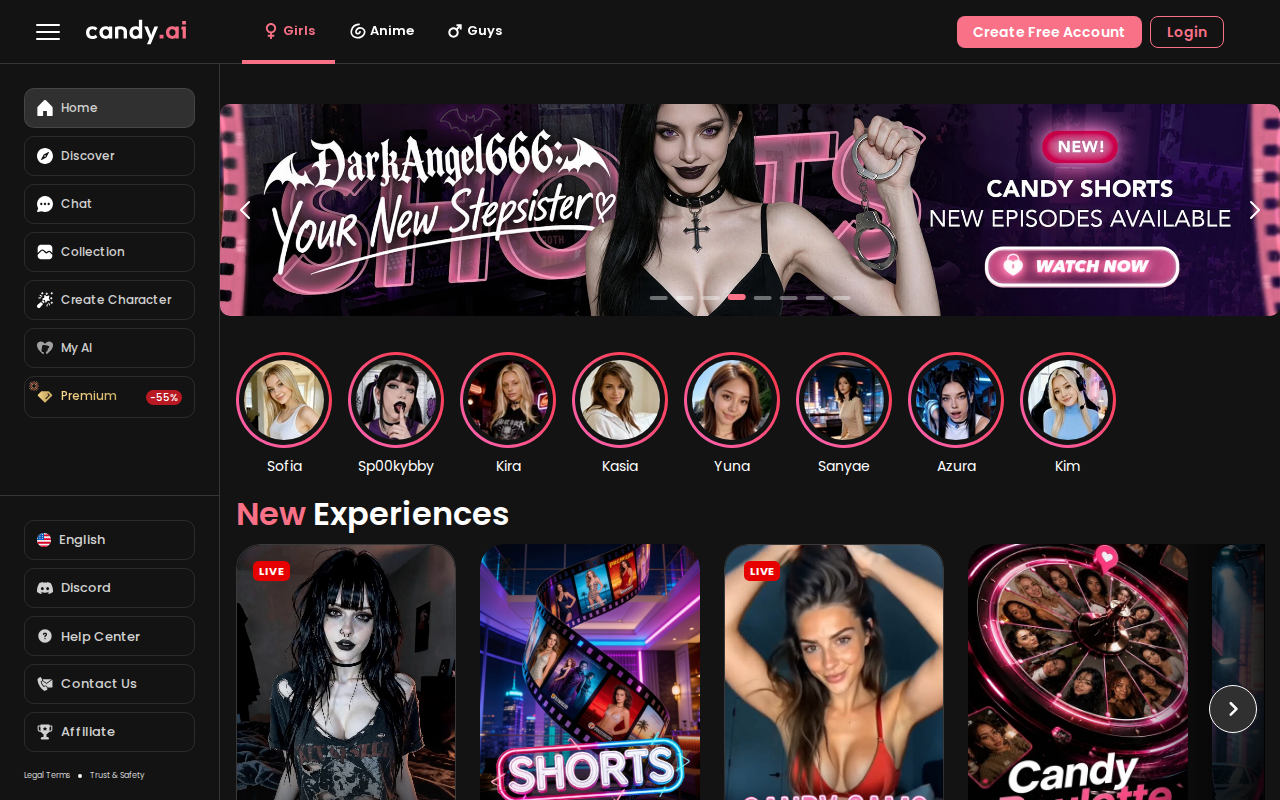
| Candy AI | “from $3.99” / $12.99/mo | $30–$80+ media-heavy | Token top-ups above the included cap | Opaque |
| DreamGF | $12.99/mo ($5.99 annual) | $25.99/mo recurring after promo | Promo first-payment renews ~2× higher | Opaque |
| Chai | $13.99/mo ($11.25 annual) | $13.33–$29.99 | Site annual ($13.33) > review annual ($11.25); Ultra upsell | Watch |
| CrushOn AI | $5.99/mo ($4.19 annual) | $4.19–$49.90 by tier | Message metering; premium cited up to $29.99 | Watch |
| Nastia | $11.99/mo | $11.99–$19.99 | Sources disagree by up to $8/mo | Watch |
| Talkie | ~$7.99/mo (cited) | ~$60/mo ($14.99/week) | Real price is weekly, hidden until checkout | Opaque |
Finding 1: The token meter is the most expensive word in AI-companion pricing
Token metering is the single biggest gap between sticker and reality in this category. It’s not inherently dishonest — power users who generate hundreds of images may genuinely prefer pay-as-you-go — but it means the advertised price is useless for budgeting. Three of our 13 apps run on it (Candy AI, DreamGF, and Janitor AI’s BYO-key model), and all three land in “Watch” or “Opaque.”
Finding 2: “From $3.99” and “monthly” often aren’t what they say
Two softer tricks recur across the set, and both are legal-but-slippery framing rather than outright meters:
- Promo-then-recurring. DreamGF advertises $12.99/month but the vendor checkout shows a promotional first payment that renews at $25.99/month (annual: a first-year $69.99 that recurs at $311.88/yr). Candy AI’s “from $3.99/mo” is a seasonal promo; the standard annual computes to $5.99/mo and the headline monthly is $12.99. Always read the renewal line, not the banner.
- Weekly billing disguised as monthly. Talkie is the worst offender we found: reviews cite “$7.99/mo,” but the real App Store price is $14.99 per week — roughly $60/month — and it’s hidden until the payment screen. That’s a ~4× gap between the number you read and the number you pay.
Neither mechanic shows up in a pricing table. Both show up in your bank statement. When a price looks unusually low for the feature set, the odds are high that a cadence or renewal trick is doing the work.
Finding 3: Annual billing is the one honest discount — and it’s big
Finding 4: When sources disagree, that’s your warning light

For four apps, the vendor page and independent reviews cite different prices — and that divergence is a reliable predictor of a slippery checkout. Nastia is quoted anywhere from $11.99 to $19.99/month across sources. Chai’s own site lists an annual plan at $159.99/yr ($13.33/mo) while reviews cite $134.99/yr ($11.25/mo). Talkie ranges from “$7.99/mo” in one review to the real $14.99/week at checkout. When you can’t get two sources to agree on an app’s price, assume the higher number and read every line of the payment screen before confirming. Consistent pricing across sources (Nomi, Character.AI+, SpicyChat) is itself a quiet trust signal.
The buyer’s rule, in one line

Read the renewal line, not the banner; treat any “token,” “credit,” or “BYO-key” allowance as a floor; prefer flat annual plans on apps whose price is consistent across sources. Do that and the four “Clean” apps in our scorecard — SpicyChat, Character.AI+, Nomi, and Kindroid — plus Replika if you commit annually, will cost you roughly what they say. The other eight can cost you a great deal more, and now you know exactly which mechanism to watch for on each one.
Want the capability side of the decision, not just the price? Our best Character.AI alternatives by use case and hands-on Nomi review pair the numbers here with what each app is actually good at.